
AI Gatekeeping
The Real Risk of AI Gatekeeping in Creative Communities
There’s a growing tension in creative spaces right now, especially among artists, hobbyists, and makers. On one side, people are excited about new tools powered by artificial intelligence. On the other, some are drawing hard lines and insisting those tools should not be used at all.
That instinct to protect a craft is understandable. But when that instinct turns into telling others what they should or should not use, it becomes something else entirely. When personal preference turns into a community expectation, it crosses into gatekeeping.
In the case of AI, that gatekeeping may do more harm than good.
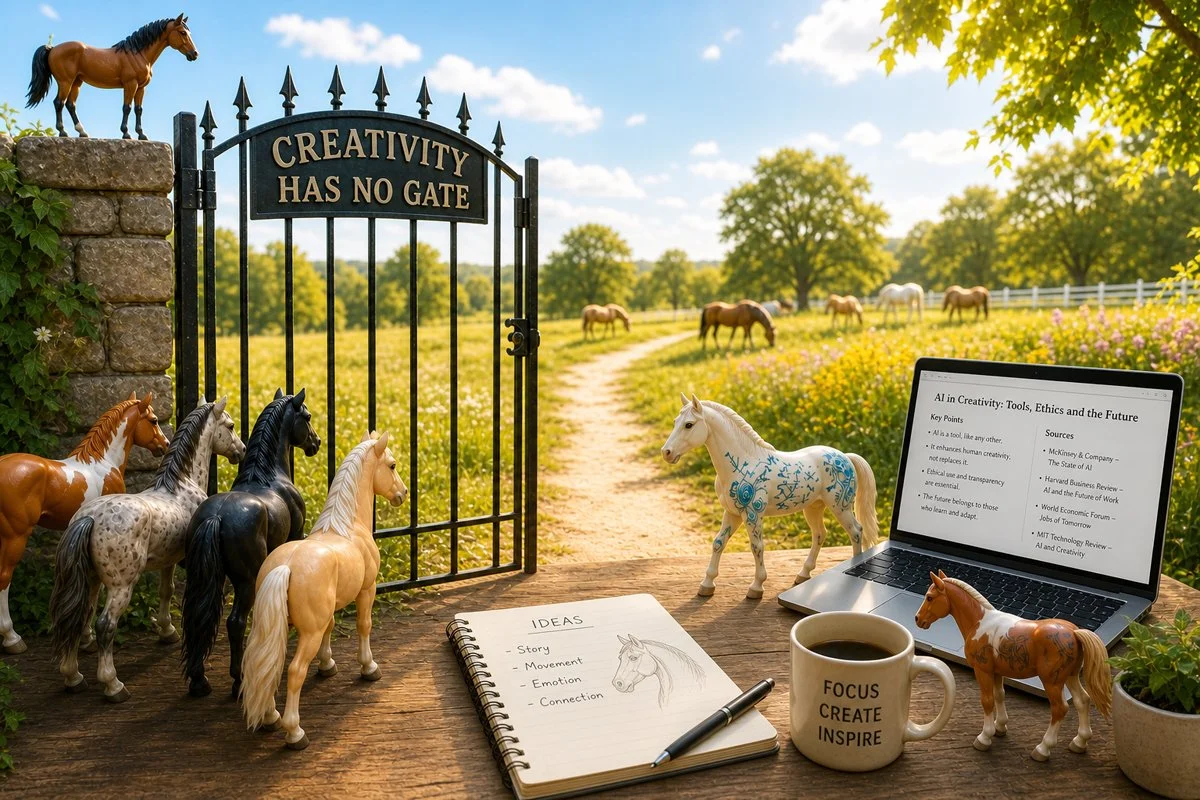
The Problem with Setting a “Gold Standard”
There is a clear difference between saying:
“I choose not to use AI in my work.”
and“No one should be using AI in this space.”
The first is a personal standard. The second is an attempt to control the direction of an entire field.
Technology has never evolved under those kinds of restrictions. Tools develop, and creators decide how to use them. Trying to freeze a moment in time and declare one method as the only valid path ignores how every creative discipline has progressed.
It is also worth noting that AI tools did not suddenly appear overnight. Versions of these tools, including automation, assisted design, and algorithm-based processes, have been in use for years. Many critics have already relied on similar technologies without recognizing them as part of the same continuum.
The Calculator Parallel
History has seen this pattern before. When calculators were introduced into classrooms, there was significant concern that students would lose their ability to do math.
What actually happened was very different.
Calculators did not eliminate mathematical ability. They shifted the focus. Students moved beyond repetitive arithmetic and were able to spend more time on higher-level problem solving, including algebra, calculus, and engineering concepts.
AI is likely to play a similar role in creative work. It can handle repetitive or time-consuming tasks, allowing creators to focus more on vision, composition, storytelling, and refinement.
The tool changes the workflow. It does not eliminate the need for skill.
AI Literacy Is Becoming Essential
Within the next five to ten years, AI literacy is likely to become as fundamental as knowing how to use a computer, a word processor, or the internet.
Discouraging people from learning these tools carries real consequences.
Job Competitiveness
The global workforce is already shifting. Many industries are beginning to expect familiarity with AI tools. Steering people away from learning them reduces their ability to compete.Critical Thinking and Awareness
AI is not just a creative tool. It is also being used to generate misinformation, synthetic media, and deepfakes. Without understanding how these systems work, people are less equipped to recognize manipulation or respond to it.
You cannot effectively question or challenge a tool you do not understand.
The Risk of Stifling Innovation
Some of the most important breakthroughs in both art and science have come from using tools in unexpected ways.
Photography was once dismissed as mechanical. Digital art faced similar criticism. Even early 3D modeling tools were considered shortcuts by traditional sculptors.
Each of those technologies eventually became part of the creative landscape.
When a community pushes for a ban or social rejection of a new tool, it does more than protect tradition. It limits experimentation. It closes the door on forms of expression that have not yet been discovered.
Innovation does not happen in controlled environments. It happens when people are allowed to explore.
The Ethical Middle Ground
The conversation around AI should not be about total acceptance or total rejection. It should be about responsible use.
That includes:
Transparency about when and how AI is used
Ensuring meaningful human input and direction
Using AI to enhance creative work rather than replace it entirely
Respecting originality, authorship, and source material
A blanket rejection of AI prevents this kind of nuanced discussion. It stops people from learning how to use the tool properly and ethically.
Education is far more effective than prohibition.
Trying to Stop the Clock
It is natural to want to preserve traditional methods, especially in communities built on craftsmanship and skill. Those methods still matter, and they will continue to have value.
But history shows that trying to stop technological change rarely succeeds. More often, it leaves those who resist it at a disadvantage.
The bigger picture is not about replacing traditional techniques. It is about expanding what is possible.
The Strength of a Hybrid Mindset
The most sustainable approach is not choosing one side or the other. It is learning how to bridge both.
A creator who understands traditional methods and modern tools has a broader range of expression. They can adapt, innovate, and make informed decisions about how they work.
That kind of flexibility is what tends to endure over time.
The future is not defined by rejecting tools or blindly accepting them. It is shaped by how thoughtfully they are used.
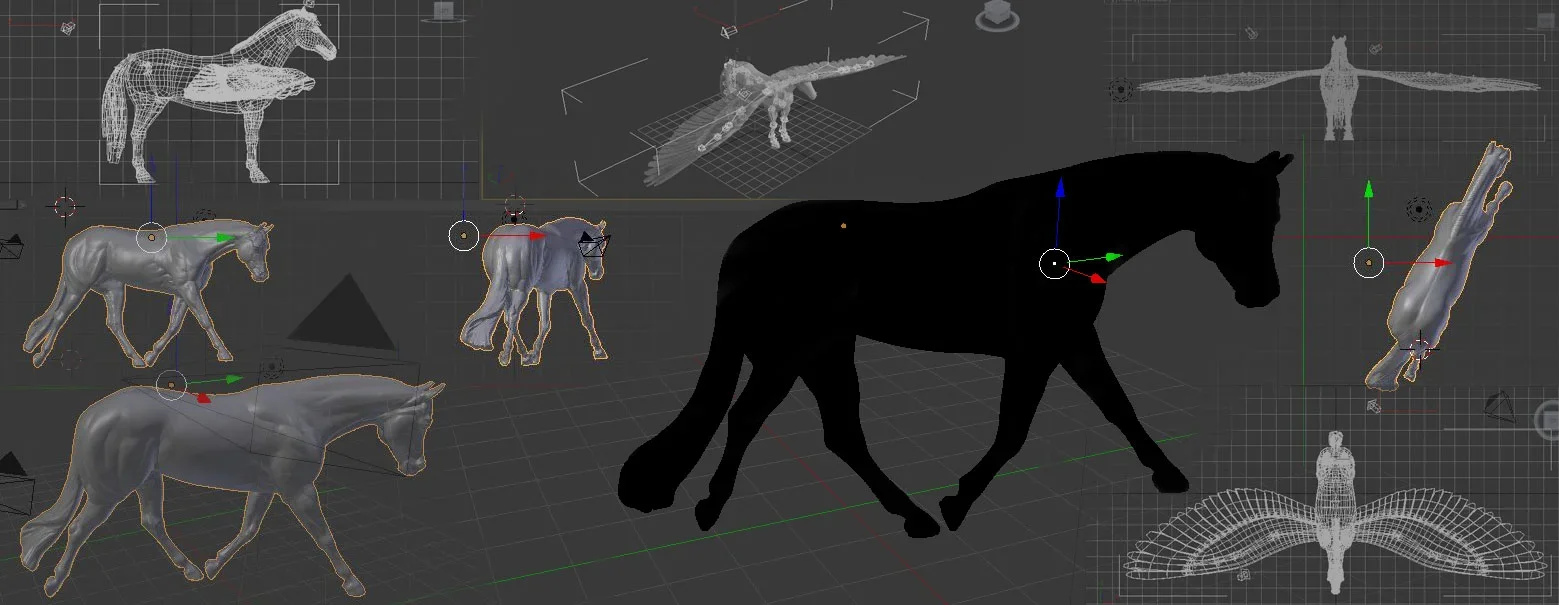
A Familiar Pattern: From 3D Modeling to AI
It is worth stepping back and looking at something many people now accept without question: 3D digital sculpting in model horse creation.
There was a time when moving from traditional hand sculpting into digital modeling felt like a major shift. It required new tools, new workflows, and a different kind of skill set. For some, it likely felt like a departure from what was considered “pure” or traditional craftsmanship. And yet, over time, it became widely accepted. Not because it replaced artistry, but because artists proved that it still required vision, decision making, and creative control.
Today, a digitally sculpted model horse is still recognized as the product of an artist. The tool changed, but the authorship did not.
That is where the comparison to AI becomes difficult to ignore.
Many of the same people who fully embraced or at least accepted 3D modeling now draw a hard line at AI. But the underlying principle is similar. Both are tools that extend capability. Both introduce new ways of working. Both require a human to guide, refine, and make choices.
If someone has already adapted to creating through a screen instead of by hand, they have already crossed the largest conceptual bridge. They have already accepted that artistry is not defined by the absence of technology, but by how that technology is used.
The difference now is not about whether tools belong in the process. That question has already been answered. The real question is where people choose to draw the next line, and whether that line is based on principle or simply on familiarity.
History suggests that line will move again.